6 Insights I Gained After Doing One Year Old Birthday Photography

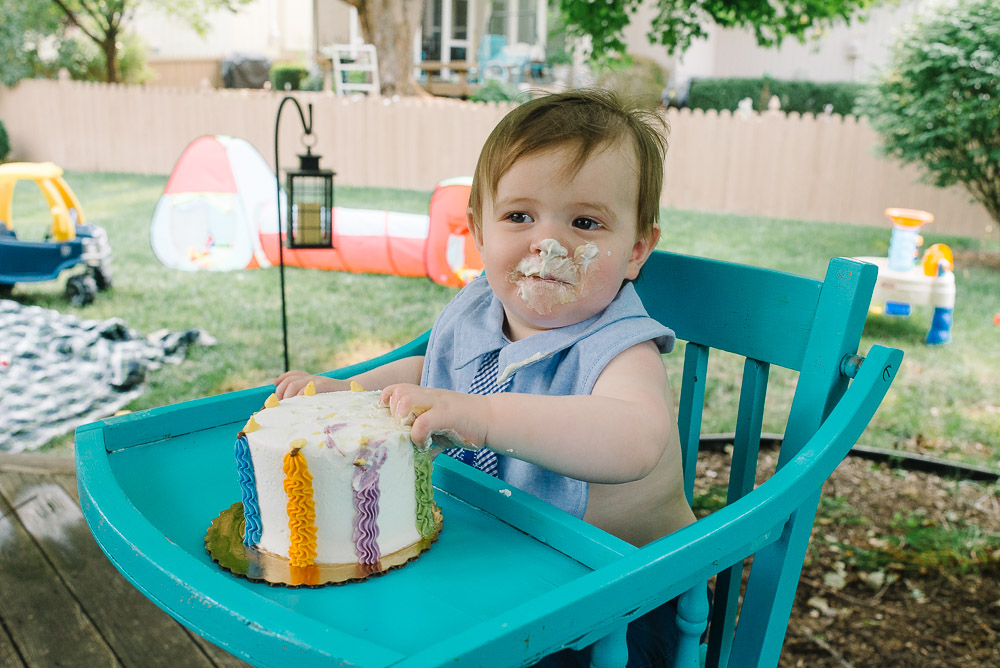
One year old birthday photography is much like any other type of event photography but you have the added unpredictability of a one year old and a bunch of other young children running around. But that just means you need to be on your toes and be ready for spontaneous action shots as they unfold.
I recently shot my nephew James’ first birthday party. It brought a bunch of people together and everyone had a great time. The photos didn’t turn out bad either so I’ll be sharing some of them in hopes that if you’ve got a little one’s birthday party coming up that you can get some insights from what I learned through the process.
One Year Old Birthday Photography Insight #1: Be Ready for Fast Action
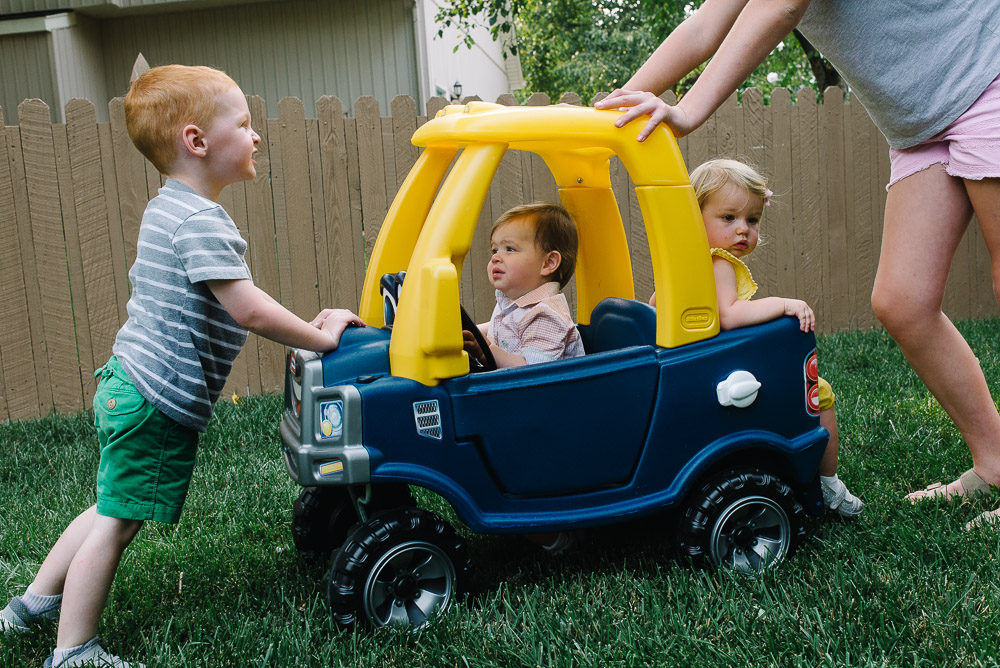
After photographing my nephew’s first birthday party, I came away with the conclusion that you have to treat these things sort of like sports. Some of the most fun shots you’ll have the opportunity of getting are the ones with kids running around playing.
To do this, you’ve got to make sure you keep your shutter speed as fast as possible. Shooting at 1/500s and faster is ideal to freeze the action, but if it you’re dealing with low light you can drop down to 1/250s.
#2: Use a Semi Automatic Mode if Necessary
For a one year old’s birthday party, you’ll most likely be dealing with not just fast moving subjects but also highly variable lighting conditions, from pretty low light indoors to very bright sunlight outdoors.
An effective way of dealing with this is to an auto mode. I don’t mean full ‘A’ mode, but shutter priority mode or aperture priority. P mode also could work but shutter and aperture priority modes give you better control while still adjusting for fluctuating lighting conditions.
I personally shot the majority of this birthday party in manual, but there were a couple shots that I probably missed when I had to adjust my settings. Just make sure whatever mode you’re shooting in to set a minimum shutter speed that you don’t go under.
#3: Include Multiple Subjects in Your Frames
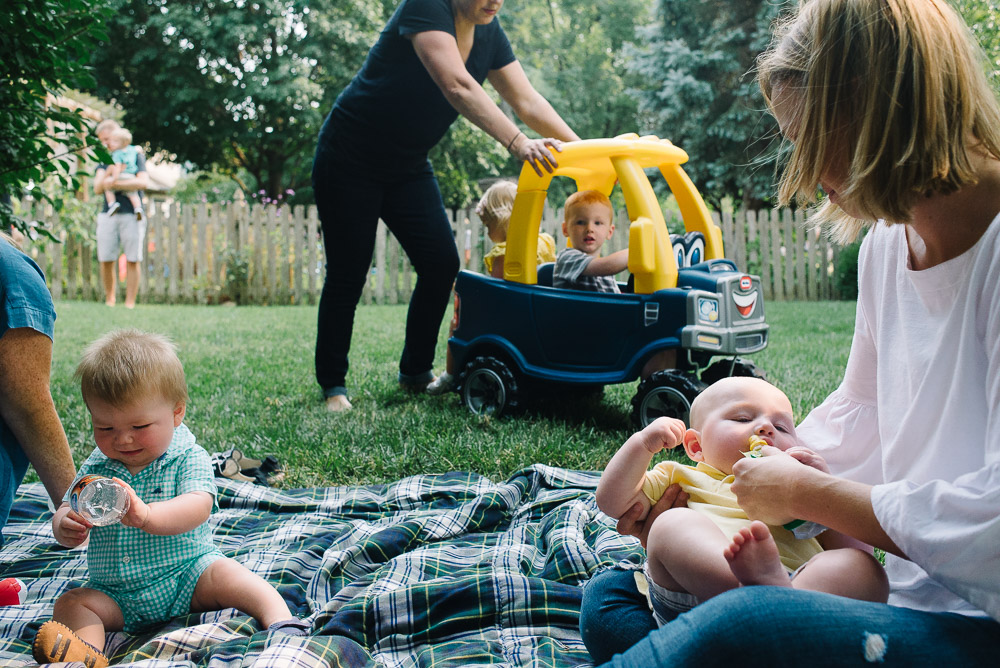
This is a basic fundamental for shooting event photography, but one that I didn’t realize when I shot my first wedding. My biggest issue was that I isolated subjects by themselves, almost as if I were taking portraits.
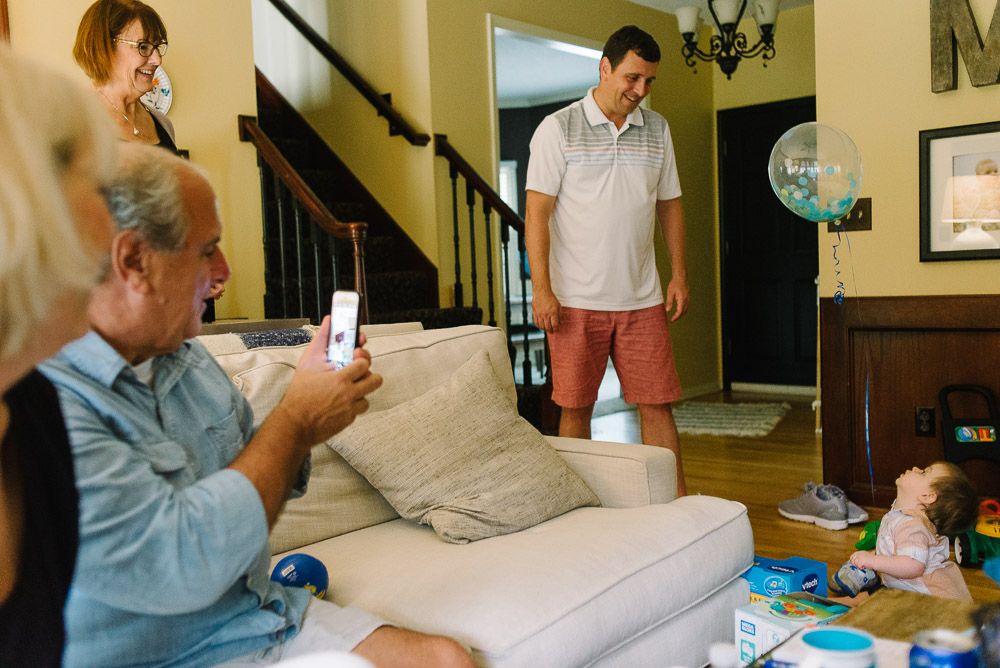
By including multiple subjects and spacing them out within your frames, you make much more interesting photos and you actually tell the story of the event.
#4: Wait for Interactions
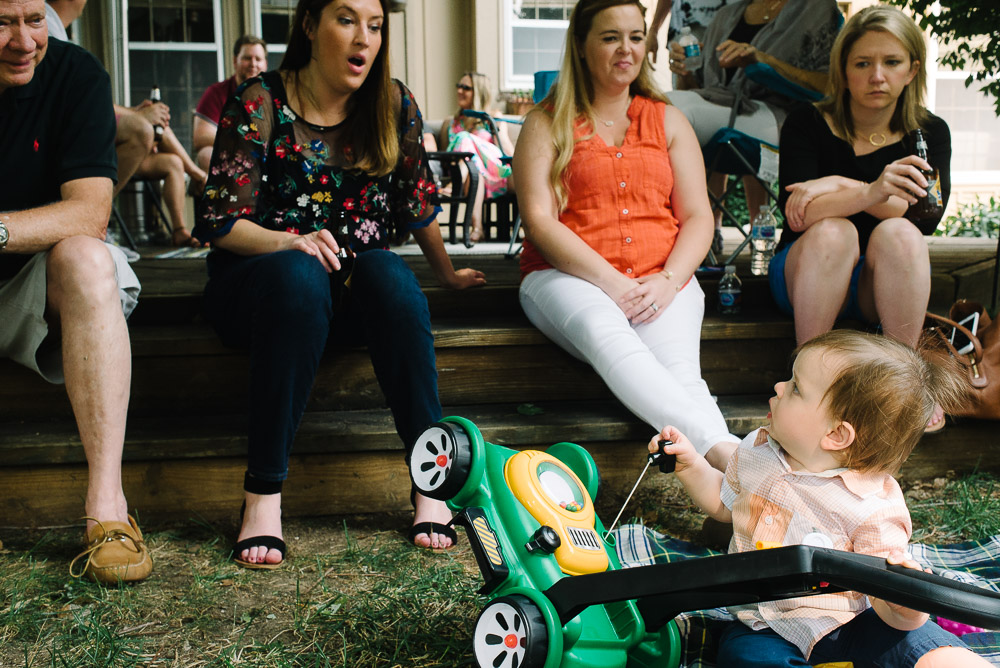
When photographing multiple subjects in your frames, be patient. You can sit there with your camera to your eye with your subjects framed the way you want and wait until they do something interesting or interact with on another.
This could be any type of gesture really. It could be a smile, a wink, a handshake between people, subjects dancing together or even just two subjects making eye contact.
Waiting for these interactions may make you antsy or feel awkward but in the end it pays off.
#5: Work Your Angles and be Open to New Perspectives
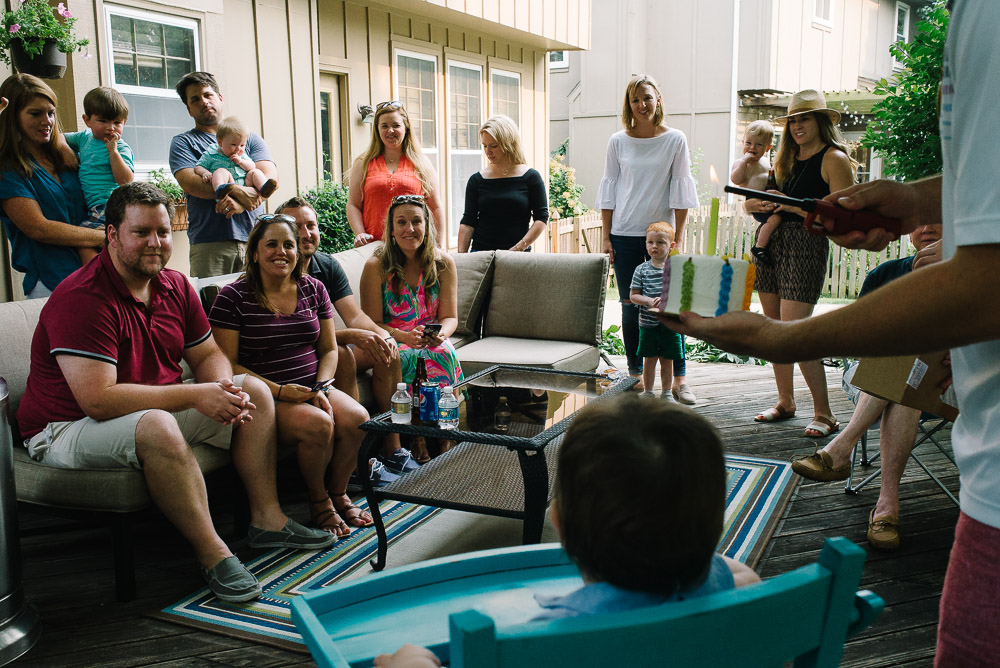
The photo above is shot from an angle that I may not have thought of had I not learned this in wedding photography. I similar situation arises in wedding photography when someone is giving a speech and there are a bunch of people gathered around to listen.
Your first instinct might be to photograph that speaker straight on. A couple of those shots can be fine but a lot of time what’s more interesting is placing that speaker as a small subject in the corner of the frame and then focusing on the audience’s reactions.
I took a similar approach with this shot, positioning my nephew and his dad lighting the candle in the foreground of it and then focusing on the guests of the party and their reactions.
#6: Keep the Camera Out
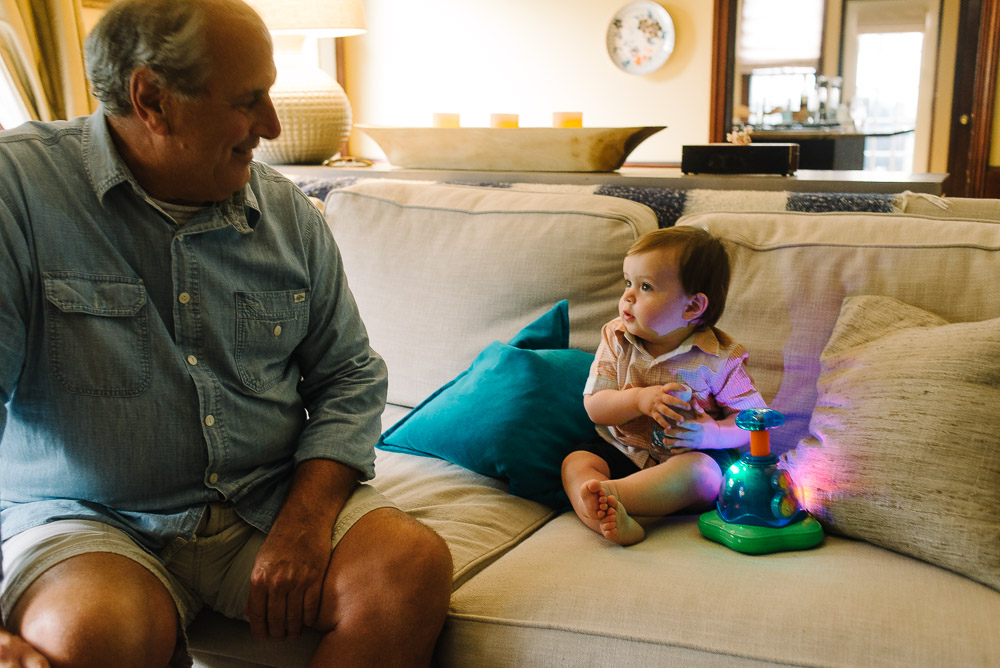
This one applies especially if you’re doing a paid gig but the point is to keep shooting, even if you’re tired. Sometimes you’ll capture some of the most intimate moments at the end of the day.
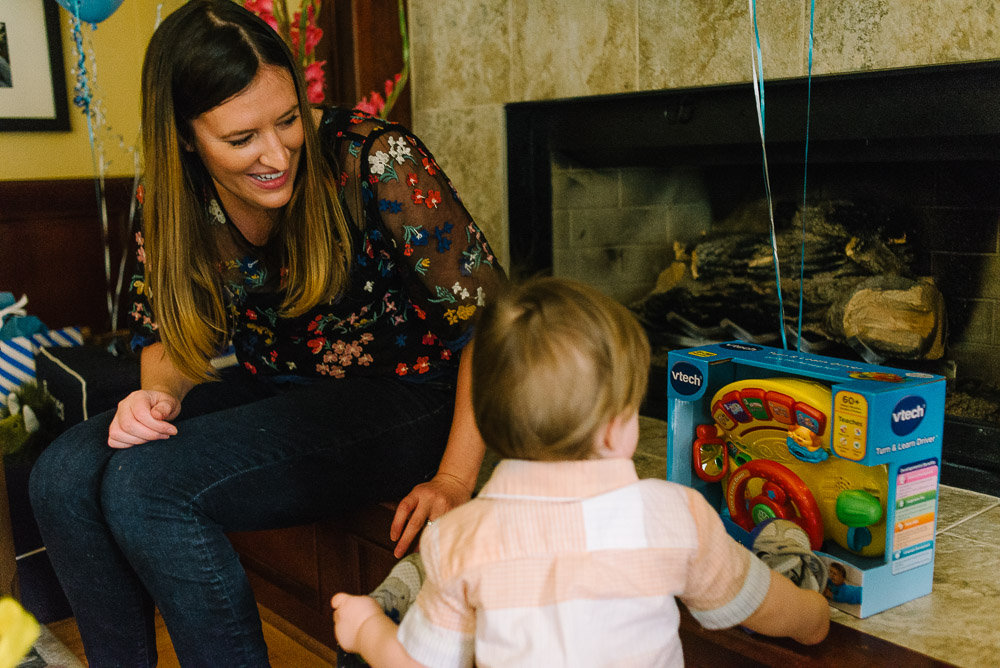
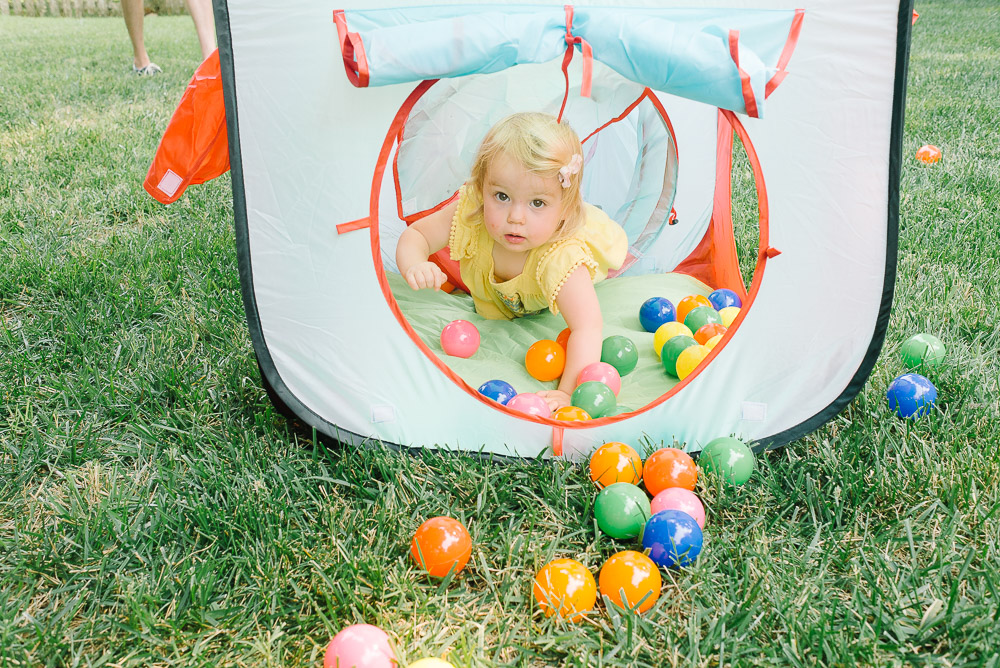
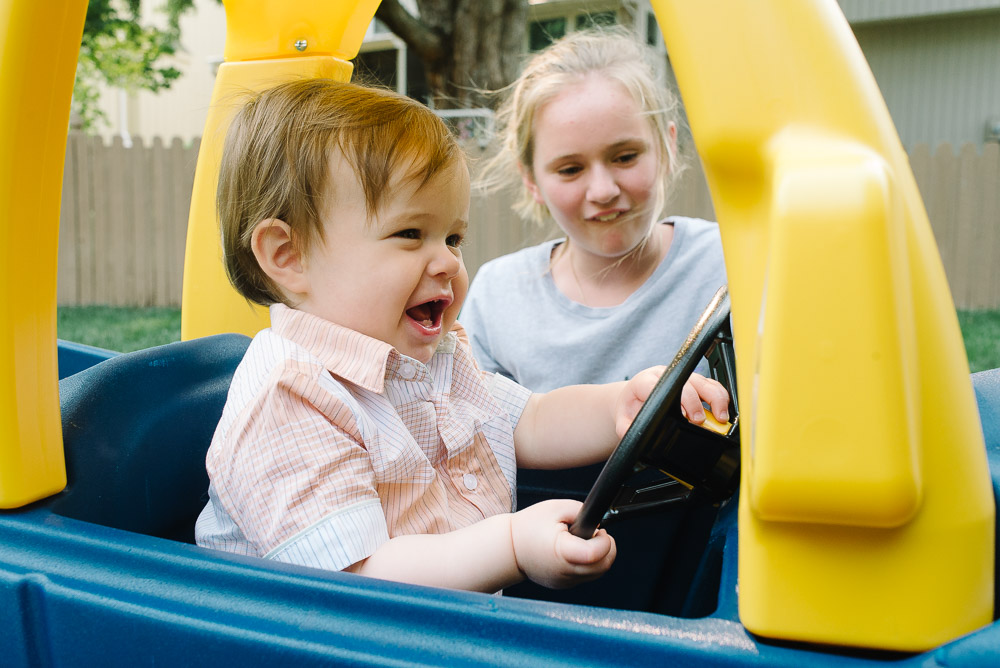
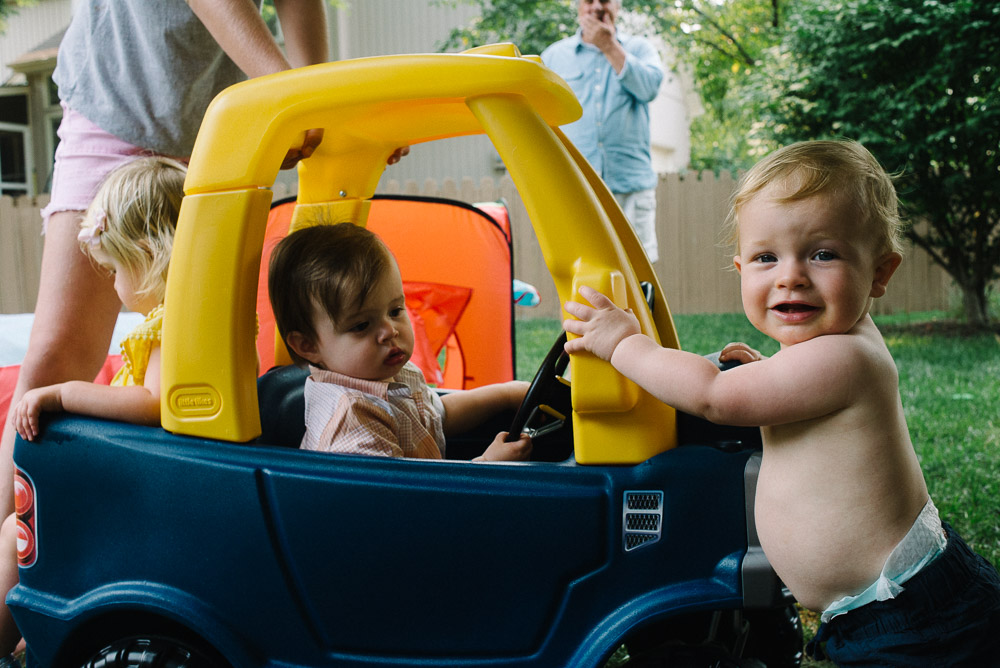
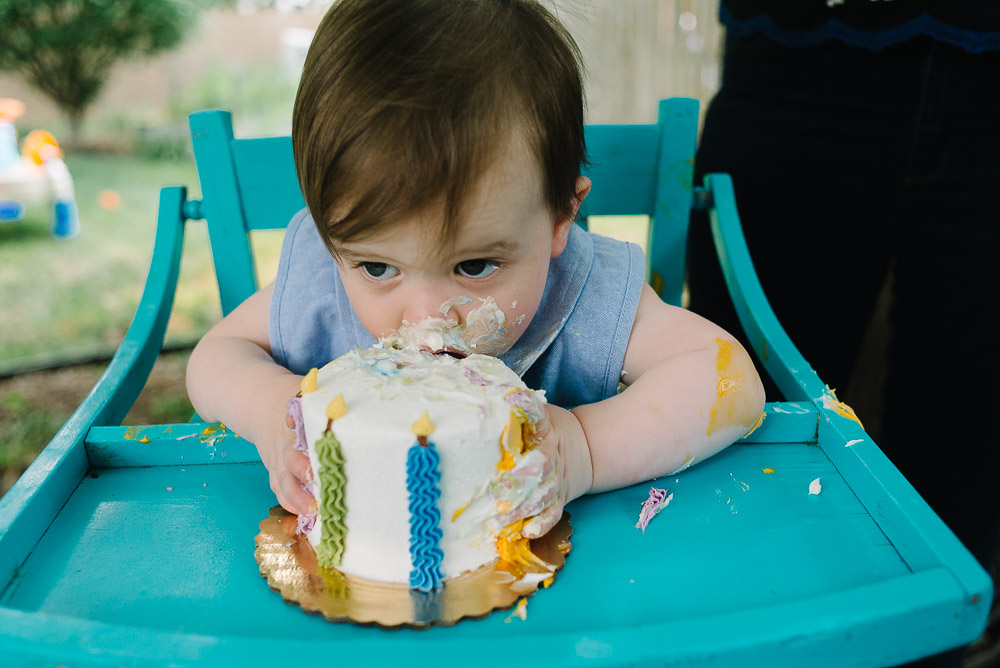
More One Year Old Birthday Party Example Images
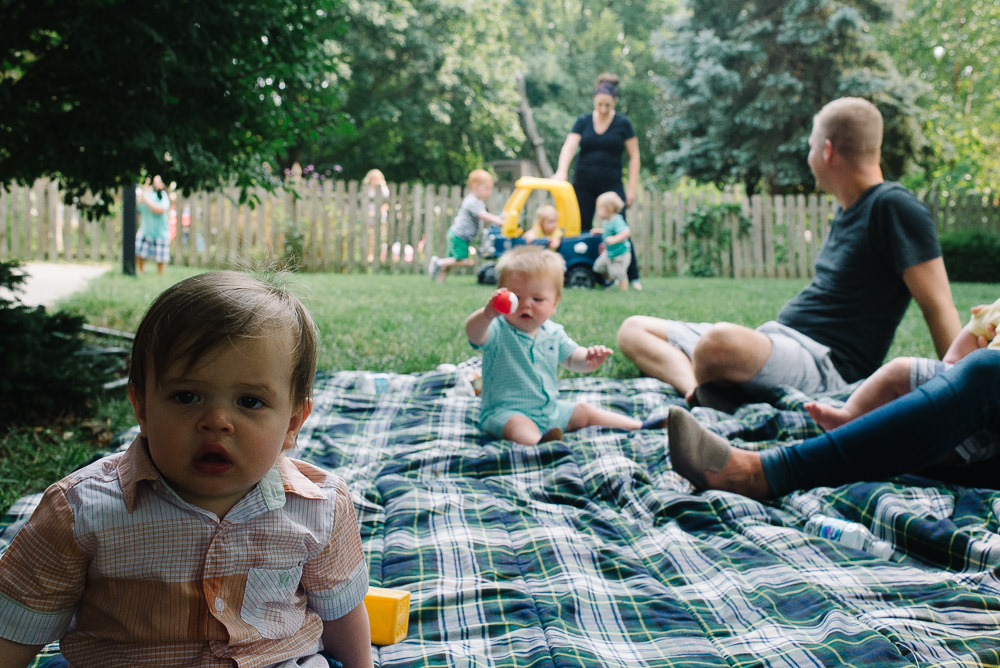
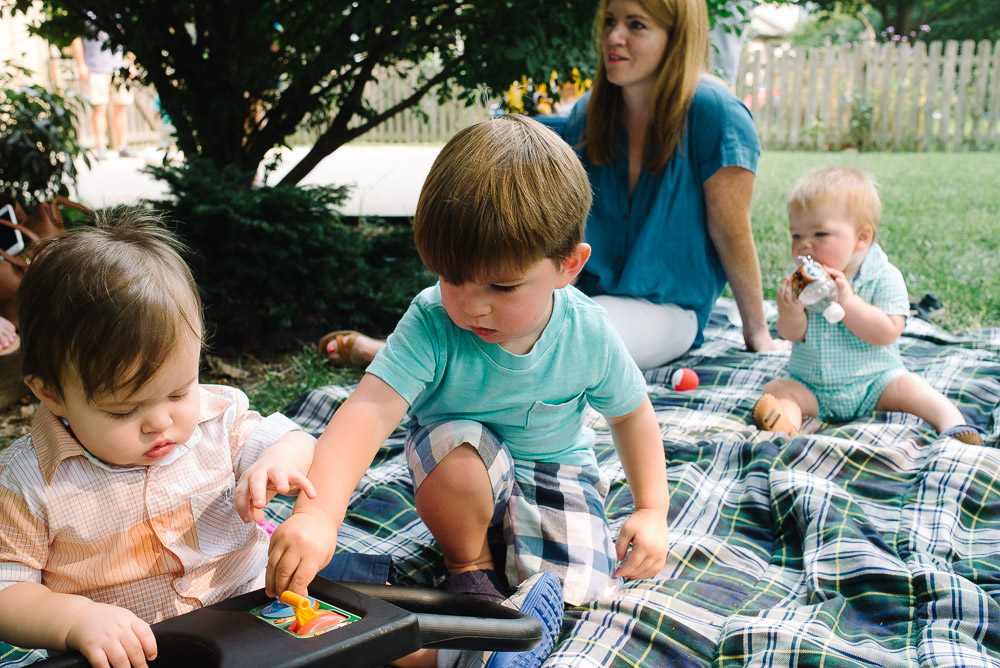
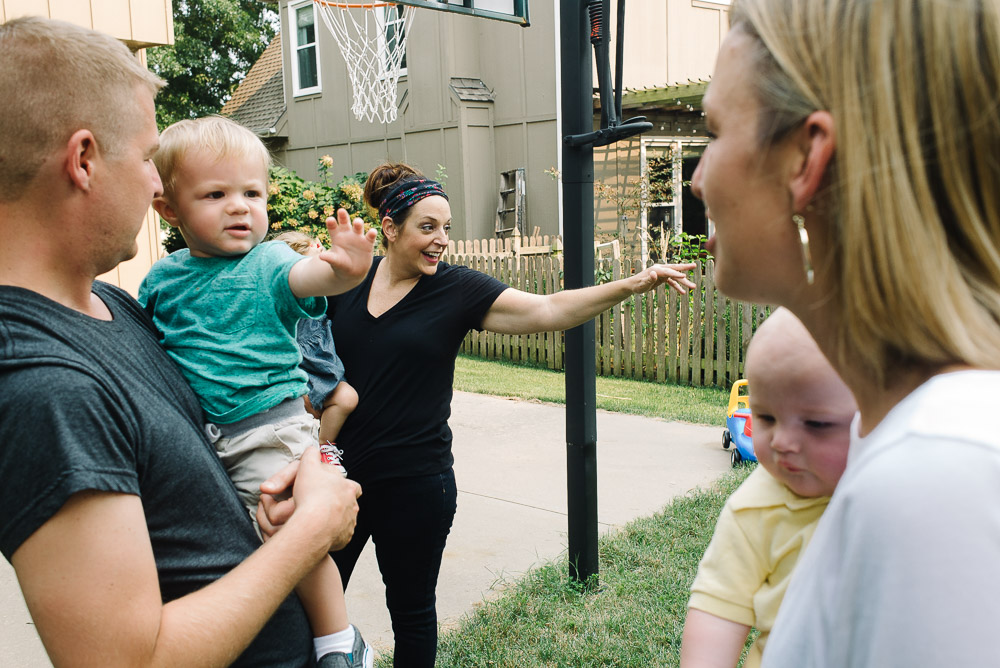
Conclusion
Any extra tips you would add to this list for shooting a one year old’s birthday party? Feel free to share them in the comments below.